Fintech Engineering

I Build Payment Systems
That Handle the
Failures Stripe Won't Warn You About.

I have spent eleven years building fintech infrastructure. Stripe Connect platforms, subscription billing engines, creator monetization systems. I have debugged webhook signature mismatches at 2am, traced a race condition that was double-charging users on concurrent requests, and rebuilt a billing engine from scratch because the original architect did not account for mid-cycle plan changes. I know where these systems break because I have broken them, fixed them, and made them production-hard.

What I Build

These are not feature descriptions. They are classes of problems I have solved in production, with real money on the line and real users waiting on the other end.

  • Stripe Connect Platforms

    I build marketplace and creator platforms on Stripe Connect with proper account onboarding, transfer routing, and automated payouts. That includes handling the edge cases Stripe's docs bury in footnotes: funds held in pending, platform fee reversals, and KYC verification failures mid-onboarding.

  • Subscription Billing Engines

    Recurring billing is not a Stripe checkout session and a webhook listener. I build full lifecycle engines: proration on mid-cycle upgrades, dunning sequences with exponential backoff, idempotent charge retry logic, and invoice finalization hooks. The kind of system that does not double-charge a user when their network drops.

  • Payment Routing Infrastructure

    Multi-currency transaction routing, platform fee extraction, and financial audit trails that your accountants can actually read. I model the ledger in MongoDB or MySQL depending on the write pattern, and I make sure every state transition is atomic before the money moves.

  • Revenue and Monetization Systems

    Subscription tiers, one-time purchases, usage-based billing, and referral credit systems. I have built all of them and I know where each one breaks. Usage-based billing breaks when your metering pipeline lags. Referral credits break when two users refer each other on the same request. I design for both.

Production Case Studies

Every project below went live, processed real transactions, and had a real ops team watching the error rate. I will walk you through the architecture decisions and the mistakes we did not make twice.

Corely

Creator Monetization Platform — Stripe Connect, Subscription Billing & Automated Payout System

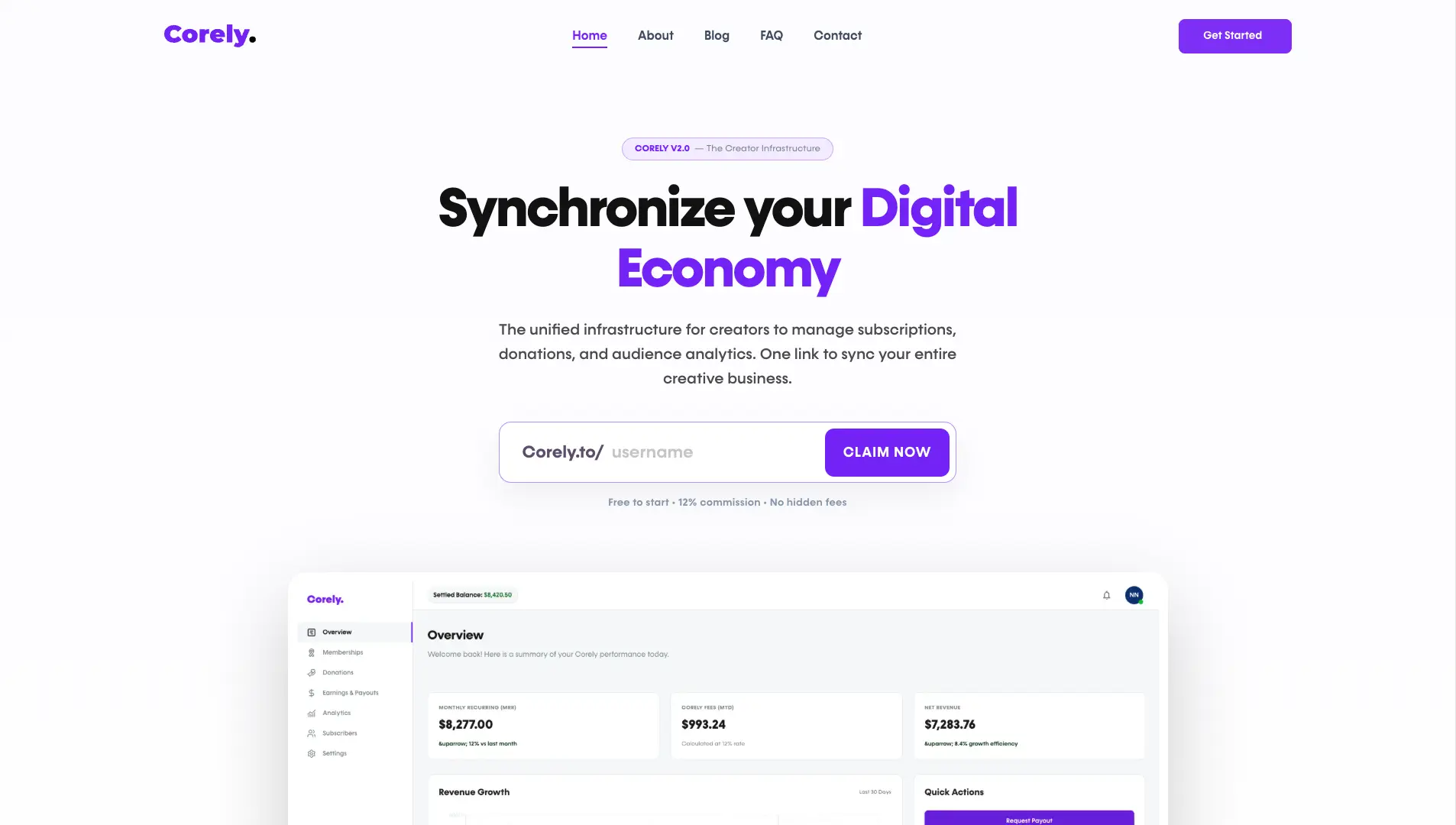
Shipped a production-ready platform with fully automated financial operations. No manual payout processing. No reconciliation spreadsheets. The 2% fee model generates platform revenue that scales with creator volume without adding operational overhead — which is the only fee model that makes sense at scale.

Most creator monetization tools are either too simplistic (basic payment links with no subscription logic) or too complex (full marketplaces with infrastructure the creator doesn't need). Corely sits in the right place: one creator, one profile, direct audience payments, automatic payouts. The engineering challenge was building a Stripe Connect integration that handles the full financial lifecycle — onboarding, KYC handoff, subscription management, payout routing, and the 2% platform commission — without exposing the creator to any of that complexity on the frontend.

  • Creator Economy
  • Stripe Connect
  • Fintech Infrastructure
  • Subscription Payments
  • Fintech Platform
  • Next.js
  • Payment Infrastructure
View Full Case Study

We Are The They

Membership Platform & Application Funnel — Stripe Subscriptions, ActiveCampaign Automation & Premium Event Listings

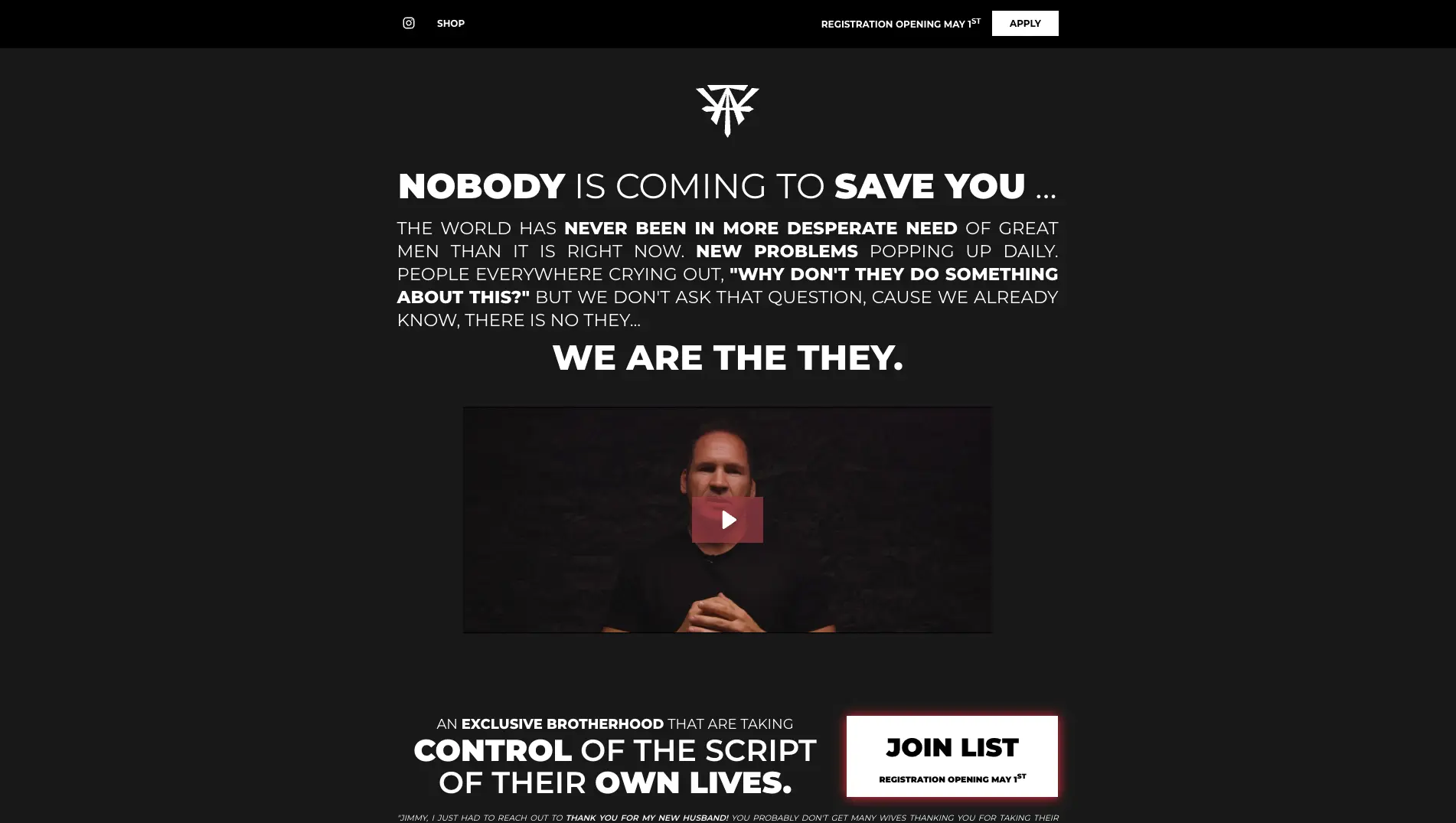
Delivered a platform that automated the entire membership pipeline — questionnaire submission to payment to welcome email — while maintaining the selective application process that makes the WATT membership valuable. The team reviews applications in their CRM; everything else runs without manual intervention.

The problem with most membership platforms is that they're built for open signups. Jimmy Rex needed the opposite: a selective application process where only approved members reach the payment page. That required a custom pipeline — not a tool, a system. Questionnaire submission feeds ActiveCampaign, the team reviews applications in their CRM, approved applicants get a Stripe checkout link, payment confirmation triggers AWS SES email delivery. Every step automated. No spreadsheets, no manual Stripe links sent over email.

  • Membership Platform
  • Stripe Subscriptions
  • ActiveCampaign API
  • Application Funnel
  • Questionnaire System
  • AWS SES
  • Next.js
  • Event Listings
  • Marketing Automation
  • Member Onboarding
View Full Case Study

Syncro

Multi-Creator Marketplace Platform — Stripe Connect, Subscription Monetization & Automated Payout Infrastructure

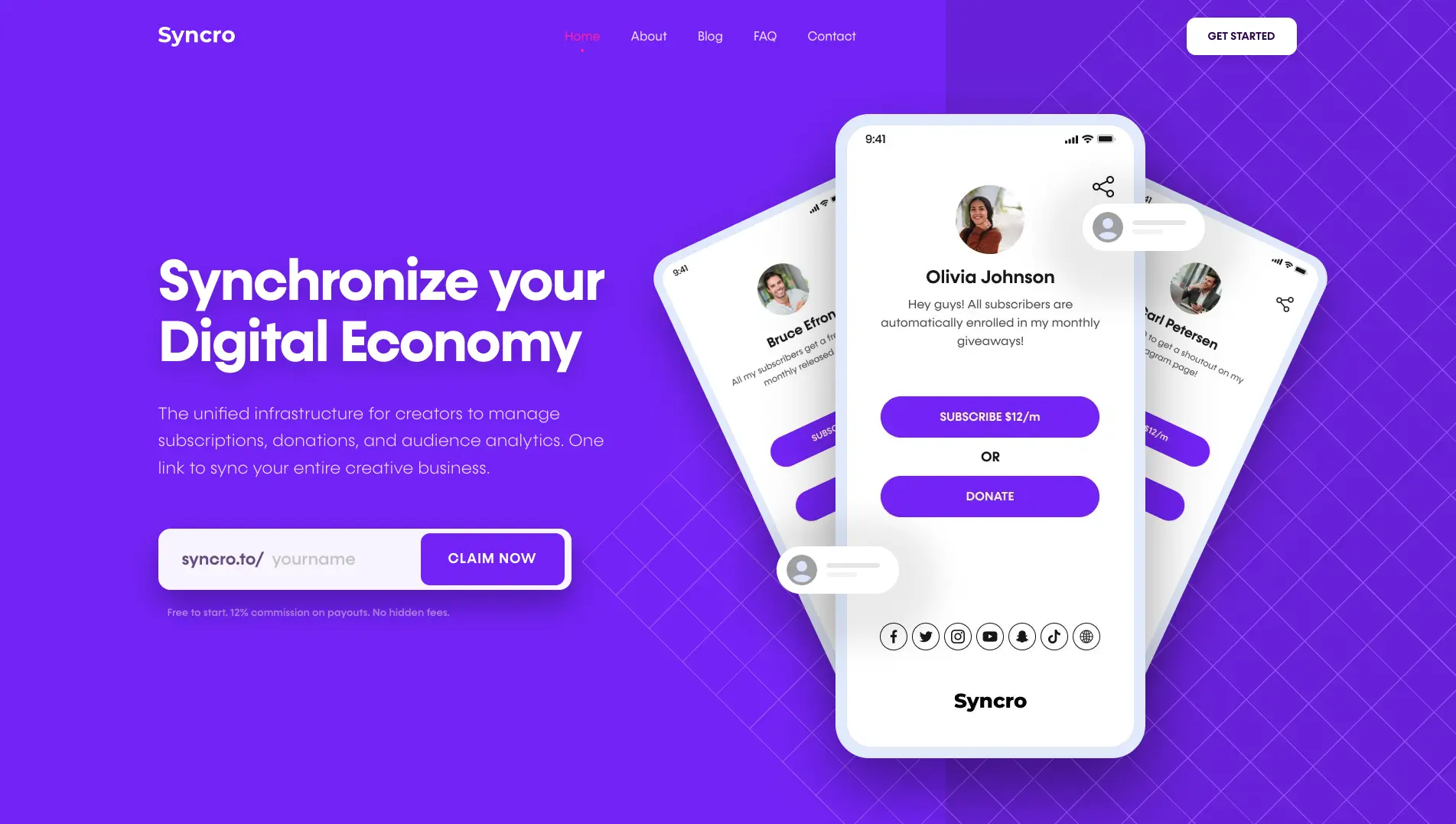
A production marketplace with fully automated financial operations across all creator accounts. Zero manual reconciliation. Zero manual payout processing. The commission model generates platform revenue at transaction capture, which means it scales with marketplace volume without adding operational overhead.

Single-creator platforms like Corely are architecturally simple compared to a marketplace. When multiple creators coexist on one platform — each with their own subscribers, their own Stripe connected accounts, their own payout schedules — the payment routing becomes the engineering problem. Syncro's architecture handles it: Stripe Connect multi-party routing, per-creator subscription lifecycle management, platform commission applied at payment capture, and isolated failure handling per creator account. One creator's payout failure doesn't affect any other creator on the platform.

  • Creator Marketplace
  • Stripe Connect
  • Fintech Infrastructure
  • Subscription Payments
  • Marketplace SaaS
  • Next.js
  • Multi-Party Payments
  • Creator Economy
View Full Case Study

My Fintech Stack

Stripe is the only payment processor I trust for production at scale. Not because it is easy, but because its API surface is honest about complexity. Next.js 15 handles the client-facing layer. Node.js runs the webhook consumers and billing workers. MongoDB stores the financial event log because its document model maps cleanly to Stripe event objects. MySQL handles anything where I need transactional integrity across multiple balance ledgers.

  • Next.js
  • React Native
  • Node.js
  • Socket.io
  • Firebase FCM
  • MongoDB
  • PostgreSQL
  • MySQL
  • Stripe
  • Stripe Connect
  • AWS Lambda

How I Think About Payment Architecture

The most dangerous line in any fintech codebase is the one that assumes a webhook fires exactly once. It does not. Stripe retries failed webhooks for up to 72 hours. If your handler is not idempotent, you will charge a user twice, or create two subscriptions, or issue two refunds for one complaint. I have seen all three in production systems I was brought in to fix.

The second most dangerous assumption is that a plan upgrade is simple. It is not. You have to calculate the unused portion of the current billing period, prorate the new plan cost, decide whether to charge immediately or at next renewal, and handle the case where the charge fails. Stripe gives you the primitives. I give you the logic that ties them together correctly.

I design fintech systems with a bias toward explicit state. Every balance change gets a ledger entry. Every webhook gets an idempotency key and a processing status stored before the handler runs. Every payout is traceable back to the source transaction. This is not paranoia. This is what your auditors will ask for in eighteen months.

Explore Portfolio Structure

Your payment system deserves more than a webhook listener.

If you are building a Stripe Connect marketplace, a subscription billing engine, or a creator payout system, bring me in before you write the first event handler. The architecture decisions you make in week one will either save you or haunt you at month six.