I Build SaaS Platforms
That Don't Break at Scale

Eleven years ago I shipped my first SaaS product. It fell over at 200 users. I spent the next decade learning exactly why. Today I architect billing systems that survive webhook storms, multi-tenant platforms with hard data isolation, and creator economy products built on Next.js 15, Stripe, and Node.js. These are production systems. I have the post-mortems to prove it.

What I Actually Build

Every item below represents a class of problems I have shipped to production and maintained under real user load. Not toy demos. Not tutorial clones.

  • Multi-Tenant SaaS Platforms

    I build tenant-isolated architectures where one bad actor cannot bleed into another workspace. Mongoose discriminators, row-level Postgres policies, and scoped JWT claims. Not shared tables with a WHERE clause bolted on.

  • Stripe Billing Systems

    Recurring billing with idempotent webhook handlers, partial refund reconciliation, proration logic, and dunning flows. I handle the Stripe events your backend will see at 3am on a Friday.

  • Creator Monetization Platforms

    Patreon-style and Buy Me a Coffee-style products built from scratch. Subscription tiers, one-time payments, payout logic with Stripe Connect, and creator dashboards backed by real aggregation pipelines.

  • RBAC Admin and Analytics

    Role-based access control that actually enforces at the API layer, not just the UI. Admin dashboards with time-series analytics, export pipelines, and audit logs. Because your ops team needs receipts.

Production Case Studies

These are real products. Each one had a real deadline, a real budget, and real users who would notice when something broke. I will walk you through the decisions I made and why I made them.

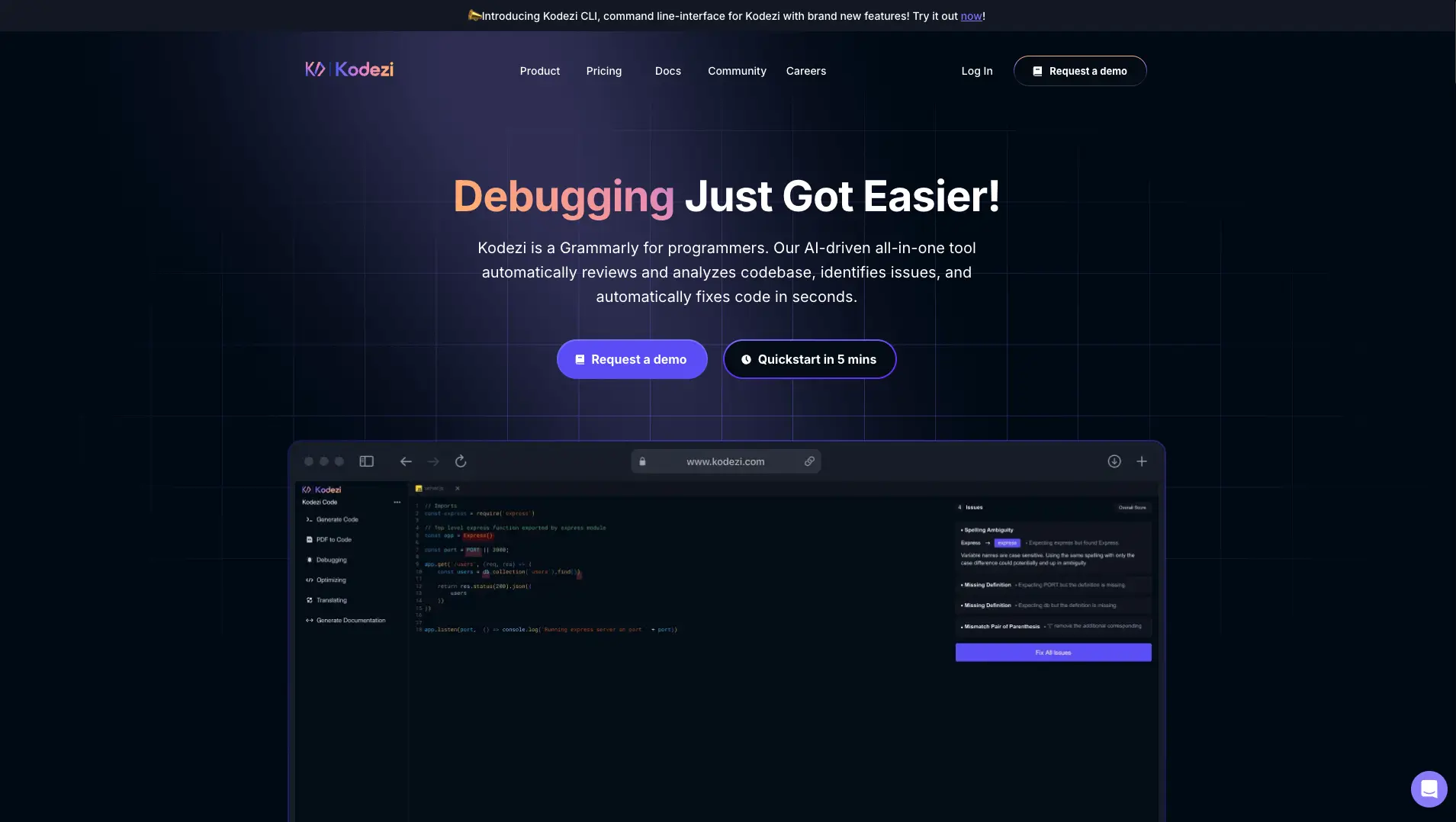
Kodezi

AI-Powered Web IDE & Developer SaaS — 200K Users, Product Hunt Launch of the Month, v1 through v4

200K active users. Product Hunt Launch of the Month (February 2023), Launch of the Week, and two Launch of the Day awards. The platform scaled from a single-developer MVP to a multi-version SaaS with real-time AI, gated premium features, in-editor tooling, and fully automated infrastructure monitoring — without requiring a rewrite of the core architecture between versions.

Kodezi is not a thin wrapper around an LLM API. It's a full in-browser IDE — Monaco Editor with multi-tab state, diff views, codebase-aware context — with OpenAI integration that understands your actual project, not just the snippet you paste in. I built it from v1 through v4: the initial MVP, KodeziChat with real-time Socket.io streaming, a credits-gated subscription system enforced at the API level, a VS Code extension with native-feeling Webview UI, and separately, an automated system status tracker that replaced manual monitoring entirely. The 200K user milestone and Product Hunt Launch of the Month were outcomes of getting the product architecture right across four iterative versions.

  • AI SaaS
  • Web IDE
  • Next.js
  • Node.js
  • TypeScript
  • OpenAI API
  • Monaco Editor
  • Socket.io
  • Stripe Subscriptions
  • MongoDB
  • MUI
  • VS Code Extension
  • System Monitoring
  • GitHub Actions
  • AWS EC2
  • Developer Tools
View Full Case Study

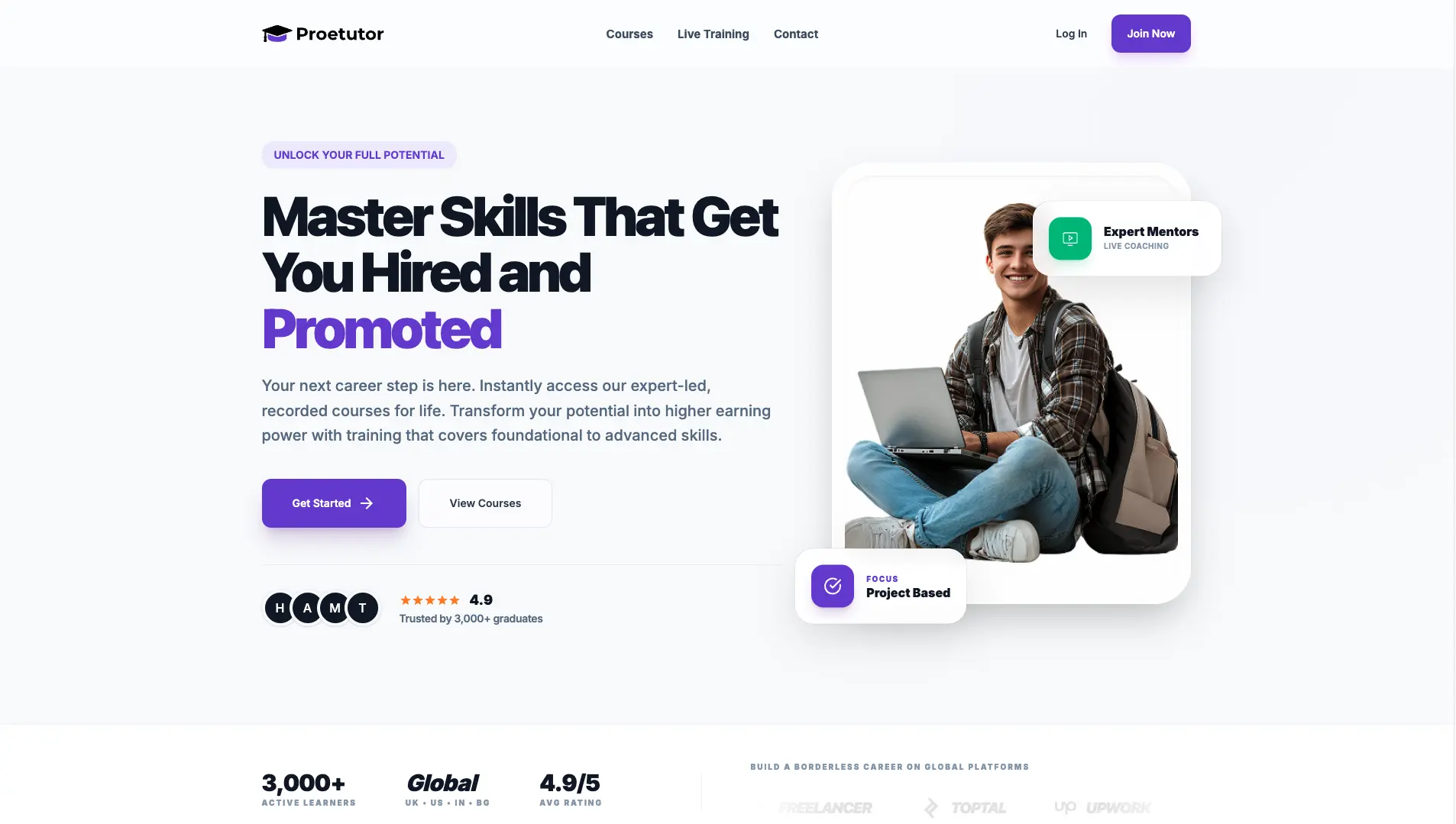
Proetutor

High-Performance LMS Rebuild — 97 Lighthouse Score, Secure HLS Video Streaming & Subscription Monetization

97 Lighthouse performance score. 92 SEO score. 96 Best Practices. Legacy Core Web Vitals issues resolved — LCP and CLS both within acceptable ranges. Premium video content protected behind HLS signed URL delivery. The platform now has the SEO foundation to actually rank for the course topics it teaches.

Legacy Laravel and Bootstrap 3 systems age poorly. Slow Time to First Byte, failing Core Web Vitals, no protection on video URLs — Proetutor v1 had all of them. The rebuild wasn't just a UI refresh. It was a full architecture change: Next.js 15 with server-side rendering for SEO-indexed course pages, a clean Lumen v11 API layer, Bunny Stream replacing unprotected video hosting, and a monetization system that handles subscriptions and lifetime access from the same checkout. The result was a 97 performance score and a platform that ranks on the pages a legacy system never could.

  • LMS Platform
  • SaaS
  • Next.js
  • Lumen v11
  • PHP 8.4
  • MySQL
  • Bunny Stream
  • HLS Video Streaming
  • Performance Optimization
  • Educational Platform
View Full Case Study

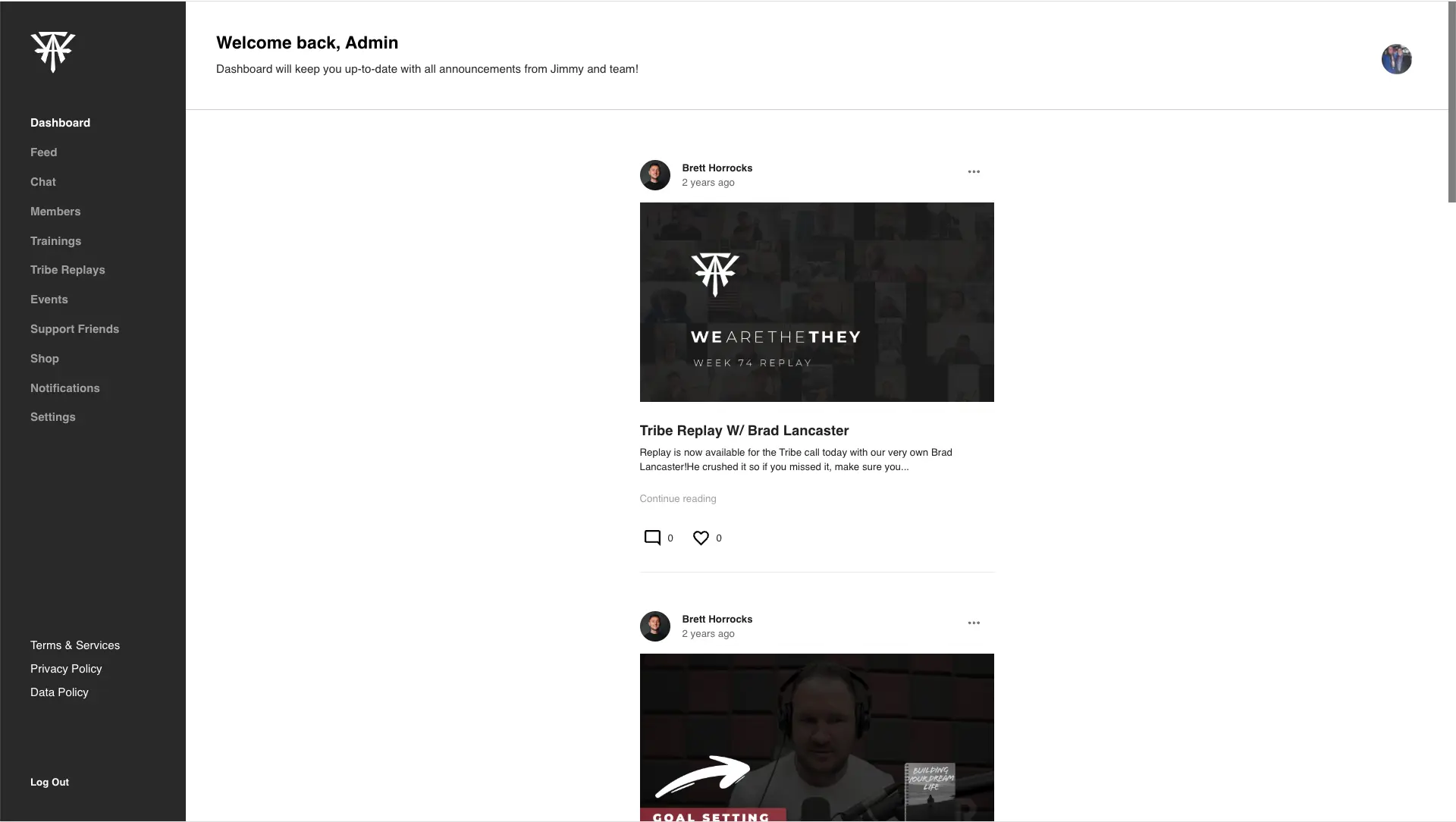
WATT Community Platform

Private Real-Time Social Community — Rich Post Feed, Group Chat, iOS App & Admin-Managed Training System

A production-ready cross-platform community app that replaced fragmented third-party tools with a single owned platform. Real-time interaction across web and iOS simultaneously. Training content delivered through a structured admin-managed system, not a shared folder link. All platform features gated to verified paid members — no workarounds, no shared URLs that grant access.

Private community platforms fail in one of two ways: they either use off-the-shelf tools that don't integrate cleanly and feel cobbled together, or they get built as a real-time system that's underengineered and breaks under concurrent load. WATT Community needed to be a first-class product — not a Facebook Group with a custom header. Rich media posts with real-time updates across web and iOS simultaneously, group chat with full member management, a structured training system with protected Wistia video, and RBAC that means non-paying members genuinely can't access anything. All of it on a single Socket.io event layer shared between the Next.js web app and the React Native iOS app.

  • Community Platform
  • Real-Time Systems
  • Socket.io
  • Next.js
  • Mobile App
  • React Native
  • iOS App
  • MongoDB
  • RBAC
  • Social Feed
  • Group Chat
  • LMS Platform
  • Private Membership Platform
View Full Case Study

My Production Stack

I chose each of these tools under fire. Next.js 15 for its App Router and server component model. Mongoose because I know every footgun in the ODM. Stripe because nothing else handles the complexity of subscription lifecycle events at this depth. AWS because cold-start latency on Lambda is a solvable problem if you know where to look.

  • Next.js
  • React
  • Node.js
  • Lumen
  • MySQL
  • MongoDB
  • PostgreSQL
  • Stripe
  • Socket.io
  • AWS

How I Think About SaaS Architecture

Most SaaS products die from the same three causes. Database deadlocks on concurrent writes because nobody modeled the transaction boundaries. Stripe webhook failures that weren't idempotent, so a user got charged twice and churned. And cold-start latency on serverless functions that made the dashboard feel broken to new signups.

I design around these failure modes before the first line of application code is written. Schema design, queue architecture, webhook retry strategy. These decisions made at week one save you from a rewrite at month eighteen. I have done both. I know which one I prefer.

Explore Portfolio Structure

Your SaaS idea deserves real architecture.

If you are planning a subscription product, a creator platform, or a multi-tenant SaaS, bring me in before you write the schema. The decisions you make in week one determine whether you are refactoring or scaling in month twelve.