Web and Mobile Products
Built to Survive Real Traffic.

I have built web apps that fell over at 200 concurrent users and spent the next decade learning why. Today I ship Next.js 15 applications with ISR strategies that keep cold-start latency under 100ms, and React Native apps that pass App Store review on the first submission. Speed is not a feature I add at the end. It is a constraint I design around from day one.

Core Capabilities

These are not service line items. They are specific problems I have solved in production, with real users, on real deadlines. Each one has a story behind it.

  • High-Concurrency Web Applications

    I build Next.js 15 applications that hold up when 10,000 users hit the same route simultaneously. That means thinking about RSC payload size, ISR revalidation windows, and cache invalidation strategy before I write a single component. Sub-second LCP is the baseline, not the goal.

  • Cross-Platform Mobile with React Native

    One codebase, two production apps. I use React Native with Expo to ship iOS and Android simultaneously without the maintenance debt of two native codebases. That includes push notification plumbing via Firebase FCM, deep linking, and App Store submission flows I have navigated more times than I can count.

  • Progressive Web Apps

    When a full native app is not justified by the budget or timeline, a well-built PWA is the right call. Service worker caching strategy, background sync, install prompts, and offline-first data access. I have shipped PWAs that users cannot distinguish from native apps on Android.

  • Legacy System Modernization

    I have inherited jQuery monoliths, AngularJS relics, and PHP backends that nobody wanted to touch. I know how to incrementally replace them without a big-bang rewrite that breaks production. Strangler fig pattern, route-by-route migration, API versioning. You keep the lights on while we rebuild.

Production Implementations

These shipped. They have users, error budgets, and on-call rotations. I will walk you through the decisions that made them fast and the trade-offs I made to keep them maintainable.

Corely

Creator Monetization Platform — Stripe Connect, Subscription Billing & Automated Payout System

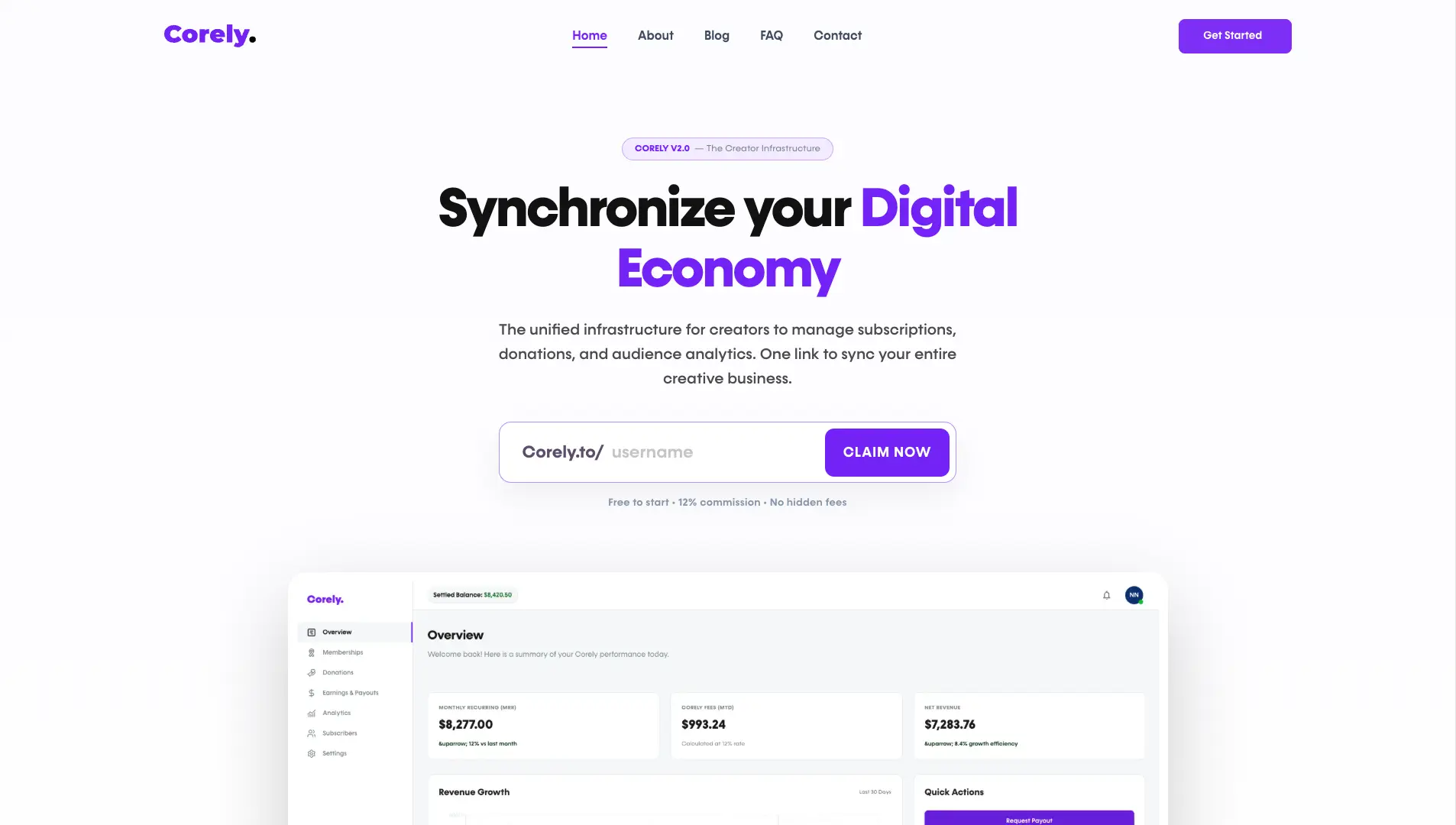
Shipped a production-ready platform with fully automated financial operations. No manual payout processing. No reconciliation spreadsheets. The 2% fee model generates platform revenue that scales with creator volume without adding operational overhead — which is the only fee model that makes sense at scale.

Most creator monetization tools are either too simplistic (basic payment links with no subscription logic) or too complex (full marketplaces with infrastructure the creator doesn't need). Corely sits in the right place: one creator, one profile, direct audience payments, automatic payouts. The engineering challenge was building a Stripe Connect integration that handles the full financial lifecycle — onboarding, KYC handoff, subscription management, payout routing, and the 2% platform commission — without exposing the creator to any of that complexity on the frontend.

  • Creator Economy
  • Stripe Connect
  • Fintech Infrastructure
  • Subscription Payments
  • Fintech Platform
  • Next.js
  • Payment Infrastructure
View Development Breakdown

Kodezi

AI-Powered Web IDE & Developer SaaS — 200K Users, Product Hunt Launch of the Month, v1 through v4

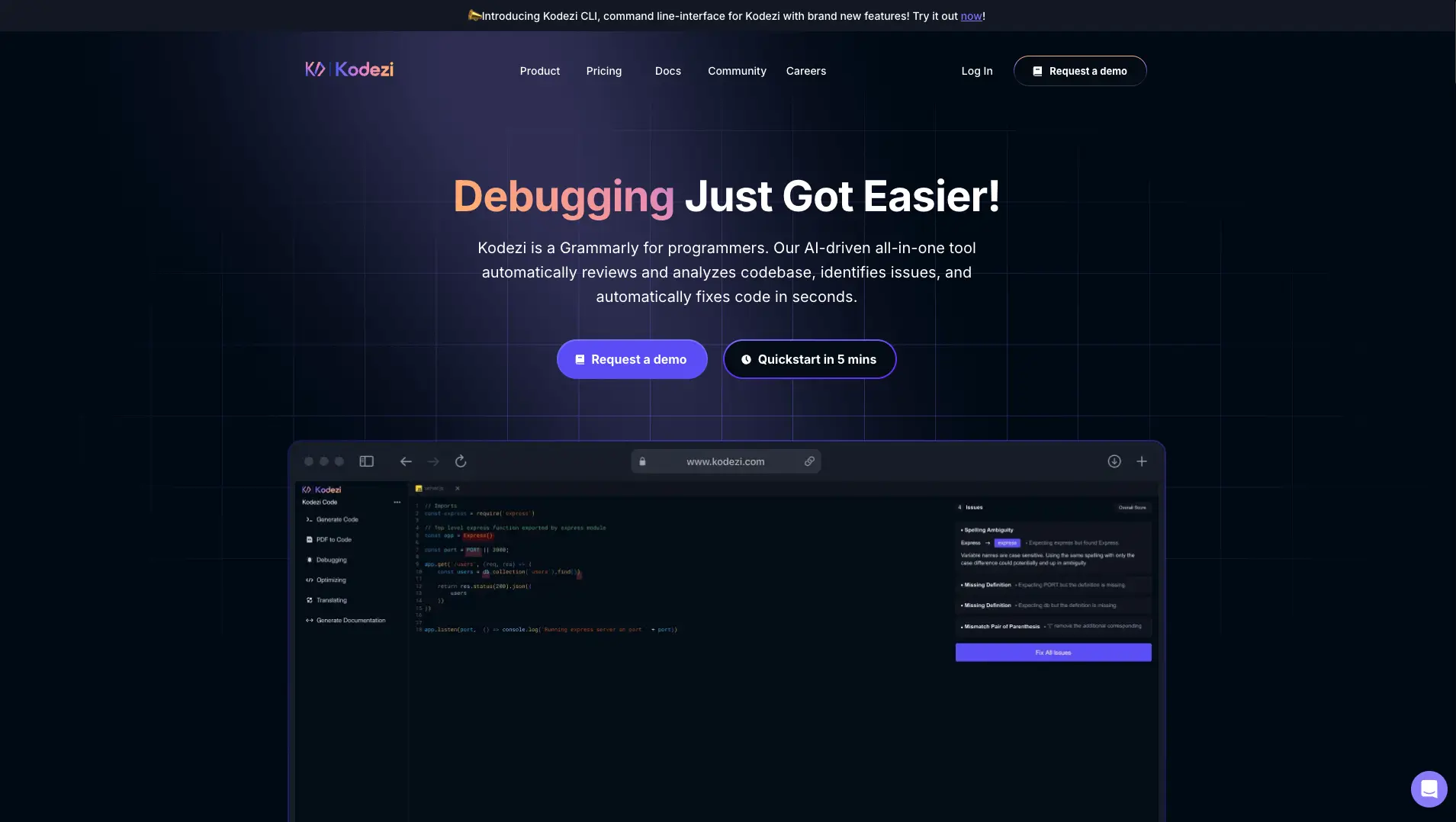
200K active users. Product Hunt Launch of the Month (February 2023), Launch of the Week, and two Launch of the Day awards. The platform scaled from a single-developer MVP to a multi-version SaaS with real-time AI, gated premium features, in-editor tooling, and fully automated infrastructure monitoring — without requiring a rewrite of the core architecture between versions.

Kodezi is not a thin wrapper around an LLM API. It's a full in-browser IDE — Monaco Editor with multi-tab state, diff views, codebase-aware context — with OpenAI integration that understands your actual project, not just the snippet you paste in. I built it from v1 through v4: the initial MVP, KodeziChat with real-time Socket.io streaming, a credits-gated subscription system enforced at the API level, a VS Code extension with native-feeling Webview UI, and separately, an automated system status tracker that replaced manual monitoring entirely. The 200K user milestone and Product Hunt Launch of the Month were outcomes of getting the product architecture right across four iterative versions.

  • AI SaaS
  • Web IDE
  • Next.js
  • Node.js
  • TypeScript
  • OpenAI API
  • Monaco Editor
  • Socket.io
  • Stripe Subscriptions
  • MongoDB
  • MUI
  • VS Code Extension
  • System Monitoring
  • GitHub Actions
  • AWS EC2
  • Developer Tools
View Development Breakdown

Proetutor

High-Performance LMS Rebuild — 97 Lighthouse Score, Secure HLS Video Streaming & Subscription Monetization

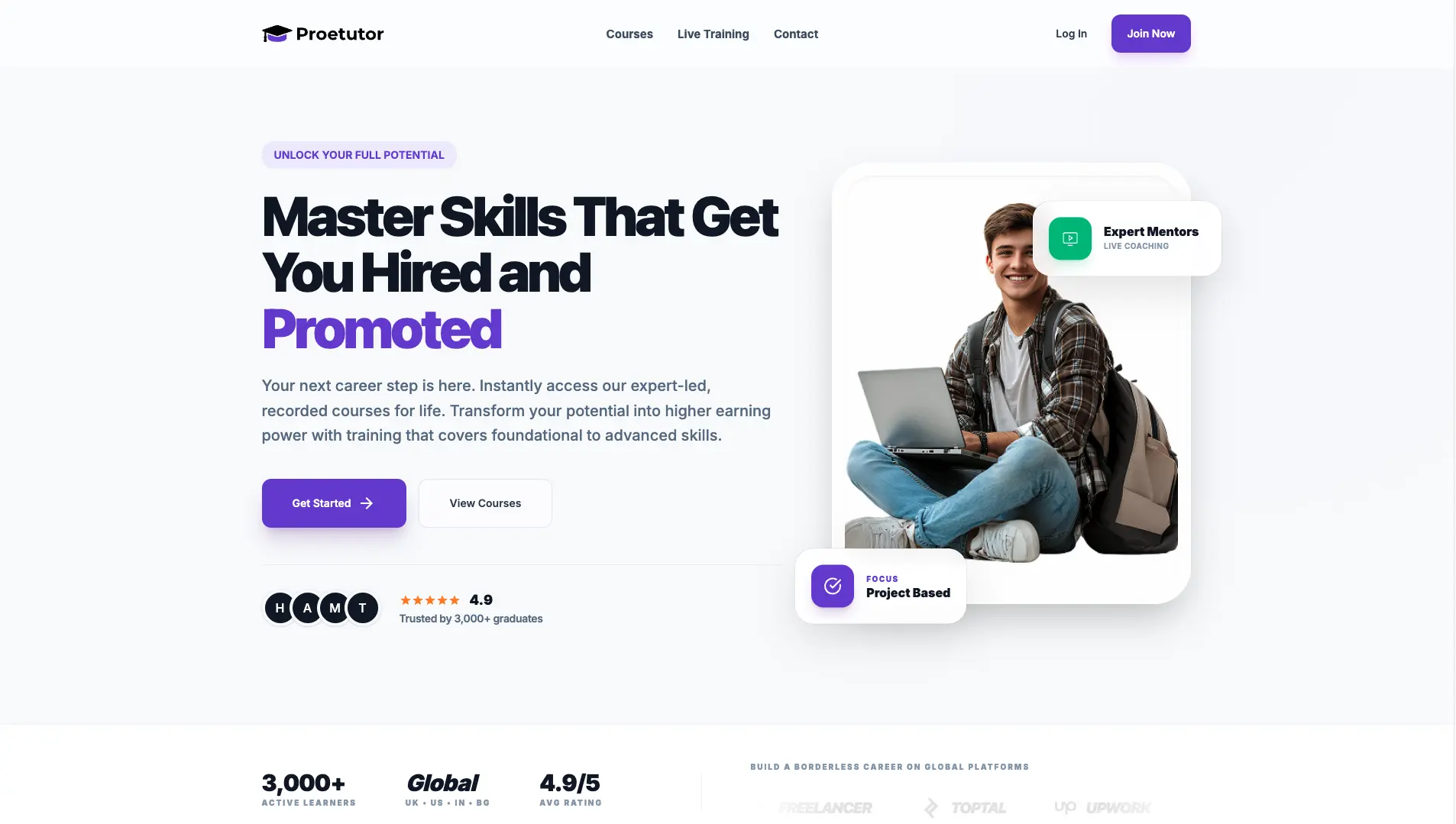
97 Lighthouse performance score. 92 SEO score. 96 Best Practices. Legacy Core Web Vitals issues resolved — LCP and CLS both within acceptable ranges. Premium video content protected behind HLS signed URL delivery. The platform now has the SEO foundation to actually rank for the course topics it teaches.

Legacy Laravel and Bootstrap 3 systems age poorly. Slow Time to First Byte, failing Core Web Vitals, no protection on video URLs — Proetutor v1 had all of them. The rebuild wasn't just a UI refresh. It was a full architecture change: Next.js 15 with server-side rendering for SEO-indexed course pages, a clean Lumen v11 API layer, Bunny Stream replacing unprotected video hosting, and a monetization system that handles subscriptions and lifetime access from the same checkout. The result was a 97 performance score and a platform that ranks on the pages a legacy system never could.

  • LMS Platform
  • SaaS
  • Next.js
  • Lumen v11
  • PHP 8.4
  • MySQL
  • Bunny Stream
  • HLS Video Streaming
  • Performance Optimization
  • Educational Platform
View Development Breakdown

WATT Community Platform

Private Real-Time Social Community — Rich Post Feed, Group Chat, iOS App & Admin-Managed Training System

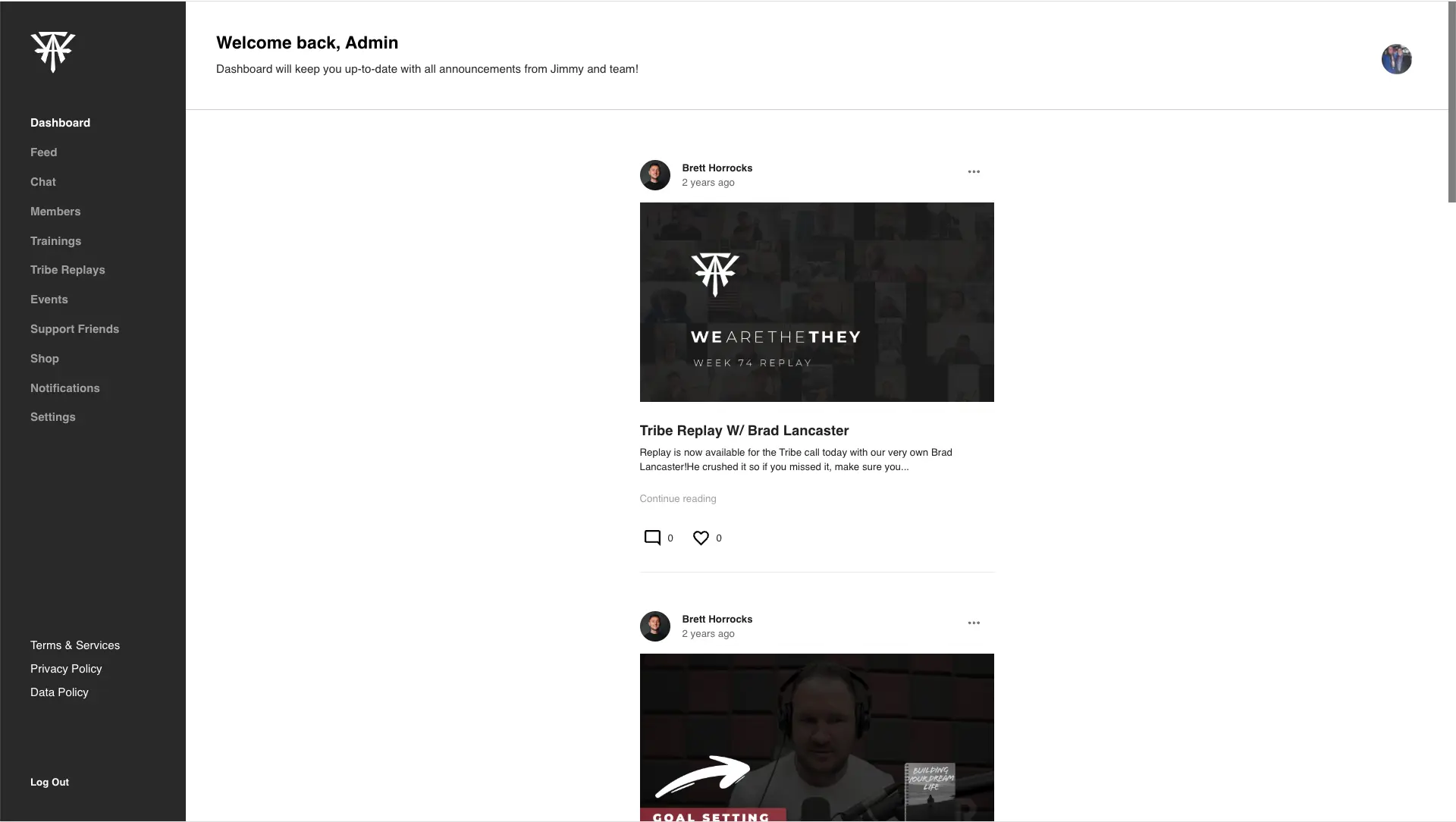
A production-ready cross-platform community app that replaced fragmented third-party tools with a single owned platform. Real-time interaction across web and iOS simultaneously. Training content delivered through a structured admin-managed system, not a shared folder link. All platform features gated to verified paid members — no workarounds, no shared URLs that grant access.

Private community platforms fail in one of two ways: they either use off-the-shelf tools that don't integrate cleanly and feel cobbled together, or they get built as a real-time system that's underengineered and breaks under concurrent load. WATT Community needed to be a first-class product — not a Facebook Group with a custom header. Rich media posts with real-time updates across web and iOS simultaneously, group chat with full member management, a structured training system with protected Wistia video, and RBAC that means non-paying members genuinely can't access anything. All of it on a single Socket.io event layer shared between the Next.js web app and the React Native iOS app.

  • Community Platform
  • Real-Time Systems
  • Socket.io
  • Next.js
  • Mobile App
  • React Native
  • iOS App
  • MongoDB
  • RBAC
  • Social Feed
  • Group Chat
  • LMS Platform
  • Private Membership Platform
View Development Breakdown

My Production Stack

I run a unified TypeScript ecosystem across web and mobile. Next.js 15 with the App Router handles the web layer. React Native with Expo handles iOS and Android. TanStack Query manages server state on both because I stopped writing custom fetch hooks in 2021 and have not looked back. Zustand for client state where Redux is overkill, which is most of the time. Firebase FCM for push notifications because I need delivery receipts and topic routing, not just a best-effort ping.

  • Next.js 15
  • React 19
  • React Native
  • Expo
  • TypeScript
  • Tailwind CSS 4
  • TanStack Query
  • Zustand
  • Redux Toolkit
  • Firebase FCM
  • Supabase
  • App Store Connect
  • Google Play Console

How I Think About Web and Mobile Performance

Most performance problems I diagnose are not caused by slow code. They are caused by architecture decisions made before the first line of code was written. Fetching data client-side that could have been server-rendered. Shipping a 400kb JavaScript bundle to a user who only needed one route. Blocking the main thread with synchronous localStorage reads inside a React component that renders on every keystroke.

On mobile, the failure modes are different but equally avoidable. A React Native app that re-renders the entire list on a state update two levels up the tree. A FlatList with no getItemLayout that jams on scroll because it cannot estimate item heights. Deep links that work in development and break silently in the production build because the URL scheme was registered in the wrong config file.

I catch these before they ship. Not with a checklist. With experience of having shipped them, watched them fail in production, and fixed them under pressure. That pattern recognition is what you are hiring when you bring me in.

Explore Portfolio Structure

Your product needs to be fast on every screen.

If you are building a web app, a mobile app, or both, I can architect a system that performs under real traffic and ships to production without the six-week bug tail. Bring me in before the sprint planning, not after the first performance regression.